Live Long and Healthy - People of the Hunza
Introduction
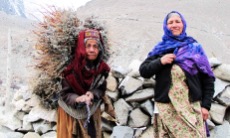
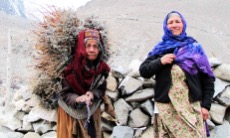
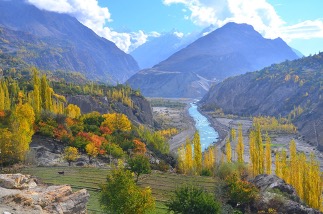
The Hunza Valley is in remote Northern Pakistan in an area where pollutants are very low. Local communities grow a lot of their own food, eat very little processed foods and use fresh glacial water to drink and bath in. These communities have a diet rich in vegetables, milk, grains, and fruit with little meat and have active physical jobs and lifestyles. The Hunza people are legendary in claims of longevity and said to sometimes survive to ages up 150 years old. Whether or not this is entirely fact, there is evidence to show that the lifestyle of nutrient rich diet, medicinal herbs, exercise, clean air, water and soil and spiritual connection makes the Hunza one of the healthiest groups of people globally.
Geography
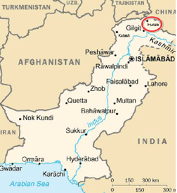
The Native State of Hunza lies amidst huge mountain ranges, Karakoram, Himalaya and Hindu Kush, which create a network of peeks, valleys and glaciers. The Hunza valley is situated across the Karakoram in the Gilgit-Baltistan region of Pakistan, is elevated to 2438 meters (Akhtar et al, 2016) and its borders touch Russia, China, Afghanistan, India and Kashmir.
The lower regions of Hunza are in a dry temperate climate zone with the higher regions falling into alpine zone giving mild summers and very cold winters. The river Hunza flows through the Karakoram mountain range and provides the habitat for 70% of the flora and flora of the area on which the people living there have relied on historically for food, shelter, trade and medicine (Kahn et al, 2013).
History
The Hunza people pass down stories that claim their descendance back to the soldiers of Alexander the Great’s army. Whilst no scientific evidence has proved this, the fact that this group of people speak Burushaski which is a combination of Macedonia and Hellenistic languages spoken across the Persian Empire, may support this claim along with the fairness of the skin which is not typical in these regions. There are signs of human settlement in the valley going back as far as 2000 year (Hyder, 2013).
The Hunzakuts, as this ethnic group is known, have a distinct culture and way of life which is rich in traditional music, dancing, hospitality, spirituality, and community (Khan et al, 2013). Although Hunza was very hard to reach physically until quite recently, this culture is a blend of various civilisations and societies that passed through the Hunza Valley when it was a significant stopping point on the Old Silk Route linking China to the Mediterranean. People who did manage to reach these communities conducting business and exchanges of goods brought some influences to this remote community of people.
Being semi-isolated for most of their history, the Hunza people had rich fertile land for growing cereals, vegetable, fruit and some livestock and the area earned the mythical description of ‘Shangri-la’ paradise on earth (Sidky, 1994).
View of the Cosmos
According to researches such as Sidky (1994) and Csaji (2011) the Hunza traditionally view the cosmos as a system of spirits, generally known as Pari which are likened to fairies. The Pari are divided into entities with a body or without a body which dwell in the levels of the Upper, Middle and Lower worlds.
- Pari of the Upper world oversee wildlife and help to keep it free of human interference. Upper world ‘mountain’ Pari have a connection to the human Bitan (Shaman) through shamanic practice and can be accessed through dance, sacred stones, trees and other portals.
- Middle world Pari are spirits that have been separated from their Upper or Lower world groups and are stuck in the middle worlds. Humans are believed to occupy a position in this ‘middle world’.
- Lower world Pari are generally thought to be of evil persuasion and are demon, dragons and fire spirits for example.
Spiritual view on the meaning of life over the years has changed and a blend of philosophies are practiced by the Hunzakuts. Around 11BC Buddhism and Hindu became an influence and then Islam became prevalent around 15BC. However, the have Hunza people have kept many traditions of shamanic practice with a ‘Bitan’ in communities to connect to the spirit world. (Csaji, 2011).
Ceremonies and ritual
The Bitan holds the place of a shaman in Hunzakut culture and is chosen by the mountain Pari of the upper world for their purity shortly after birth. This Pari comes to them again at puberty giving signs to the community that this is the new Bitan, this role can be male or female. The role of this person is to connect the community to spirits through moving in and out of the Upper and Lower worlds (Nicolaus, 2015).
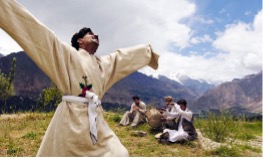
The Bitan performs the giratas dance and go into a trance at public festivals, predicting the future, fertility and success of the people. The music that takes the Bitan into a ‘flying’ trance is played on two types of drum and a whistle and known as siri-zaman, sweat tongue. Other elements believed to transport the Bitan to the other worlds are the long coat that is worn that whirls with the dance, smoke from juniper leaves and the blood of a male goat (Sidky, 1994).
The role of the Bitan in the modern Hunzakuts has lessened and there are far fewer of them in communities. With the decline of the Bitan the Hunza people believe that the Pari are also dying out in the levels of the world.
Traditional Medicine and Healing
Traditional form of medicine and healing was considered to be a holistic approach using diet, lifestyle, exercise and plant medicine. The mountainous terrain of the Hunzakuts home means that they would have been extremely fit. Diet traditionally would have been mainly plant based and often eaten raw with very little meat reducing oxidative stress and diseases such as high cholesterol and diabetes . A diet of lots of fruits that could be cultivated in that environment would have also formed part of keeping disease at bay. Apricots, cherries, grapes, plumbs and peaches would have been prevalent giving nutrient dense food to the Hunza people. Apricots are a staple in these communities and as they are high in amygdalin (Vitamin B 17) may be part of the reason diseases such as cancer are so love in the Hunza people (Wrench, 2006).
On top of these physical attributes to health, the Hunzakuts also believe that positive attitude and spiritual well being are essential as a form of medicine. Mental health was and still is well supported by the strong social connections to community and family. This culture prioritise relationships and benefit from reduced levels of stress that this connection brings. There is little differentiation in financial terms and the culture is based on shared values which also reduces stress levels compared to western cultures.
The Bitan of the community is also linked to healing and has a role in preparing medicines that heal the body, mind and spirit. The connection to spirits is the basis of all healing traditionally (Csaji, 2011). Folk wisdom for healing was passed through the Bitan and with elder community members. Outside influences over the centuries has brough in other knowledge, however, some research suggest that more influenced by traditional Chinese medicine and others more by Ayurveda and Unani (Salim, 2019).
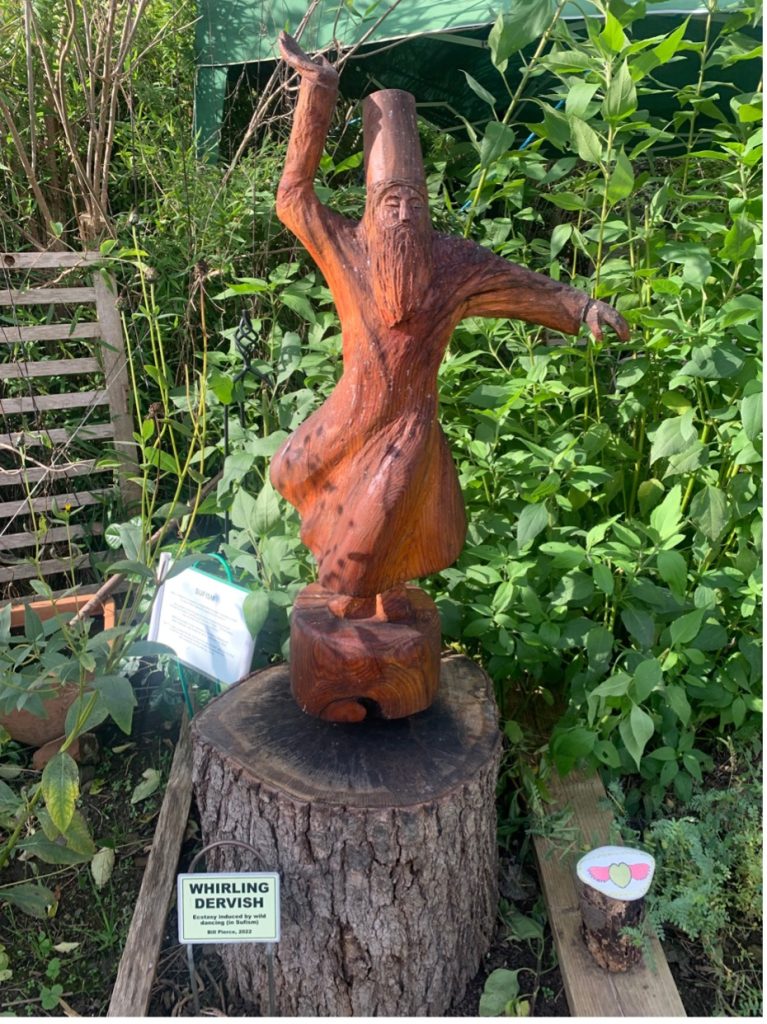
Photo of iconic Whirling Dervish (Bitan) taken at Dilston Physic Garden 2023
Ethnobotanical studies concerned with the relationship between people and plants (Hyder et al, 2013) observe that the people of the Hunza have a deep connection to the plant itself and harvest wild or cultivated medicinal plants with respect and ceremony. Herbs would be carefully dried, stored or preserved in particular ways according to the traditions passed down between families.
Whilst people over the centuries were passing through the Hunza Valley, it was historically very difficult to reach and the isolated communities would see few outsiders meaning that they were, and still are, spared exposure to a lot of diseases. However, high salt content from preserving foods in winter is suggested to have shown some incidence of high blood pressure and some studies have recorded illness including rheumatism, tuberculosis, pneumonia, heart disease and parasites. Injury would probably have been one of the most prevalent issue for health and likely to need medicine.
Materia medica
Ethnic groups across Gilgit-Baltistan, the region where the Hunza Valley is situated, have utilised local plant resources in their centuries old healing system and an estimated 300 plant species that grow there are medicinal plants of global significance (Salim et al, 2019). Studies shave researched and recorded the plants used by indigenous Hunzakut communities and what they were used for. The following two table show the details of these plants and their uses. However, roughly 38 different species were recorded as in frequent use for conditions including:
- Digestive issues, jaundice, flu, coughs, asthma, blood pressure, cardiac issues, bone fractures and bruising, dandruff, skin irritation.
The most frequently used plants appeared to be:
- Berberis lyceum, Artemisia maritima and Linum usitatissimum
Women used plants for healing the female reproductive systems, beauty and for general illness in the community. Similarly plants and were used for physical, emotional and spiritual healing for male issues.
Change and the influence of the modern world
During Partition in 1947, Hunza declared allegiance to Pakistan but kept its administrative control. This did not change until 1974 when it was brought into the Northern Area District and under the direct control of Islamabad. Further significant changed also happened in 1978 when Karakoram Highway linking Pakistan to China via the Hunza Valley was completed which meant that the Hunzakuts were no longer as physically isolated (Sidky, 1994). These two events in the 1970s have altered the spiritual connection to traditional healing through influences of modern society.
Even in the 1950 it is estimated that 80% of Hunza people still relied on natural medicine for healing. Ethnobotanical research by Khan et al (2013) suggests that in current times the figure looks more like 1.4%, with that being mainly shepherds and isolated communities outside of the trade centres. Some of the less remote communities of the Hunzakuts have been influenced by western medicines and less people rely on traditional healing systems.
However, those directly linked with market value retain rich knowledge on traditional use of the medicinal plants from the region. Major trade centres in the region also coincide with a high density of medicinal plant occurrence, knowledge, and utilization. Therefore, with the increasing trade in medicinal plant in the region, there is potential for rejuvenation of this knowledge and of plant use in the Hunza Valley (Salim et al, 2019).
References:
Csarji.L.K. Flying with the Vanishing Fairies: Typology of the Shamanistic Traditions of the Hunza. American Anthropological Association - Anthropology of Consciousness. 2011, 22(2): 159-187
[Accessed 1st May 2023]
Tika Khan, Imtiaz Khan, Abdul Rehman, Jan Alam, Shamsher Ali. Exploration of near-extinct folk wisdom on medicinally important plants from Shinaki Valley Hunza, Pakistan. International Journal of Biosciences. Vol 3, No.10
Nicolaus.P. 2015. Taming of the Fairies. Office of the United Nations High Commissioner for Refugess, Kabul.
https://www.academia.edu/31911791/The_Taming_of_the_Fairies
[Accessed 1st May 2023]
Sidky.M.H Shamans and Mountain Spirits in Hunza. Asian Folklore Studies.1994. 53 (1)
https://www.researchgate.net/publication/251986663_Shamans_and_Mountain_Spirits_in_Hunza
[Accessed 4th May 2023]
Sujjad Hyder, Surayya Khatoon and M. Imran. ETHNOBOTANICAL STUDIES ON PLANTS OF DISTRICT HUNZA-NAGAR (GILGIT-BALTISTAN), PAKISTAN. INT. J. BIOL. BIOTECH., 10 (1): 91-99, 2013 https://www.ijbbku.com/assets/custom/journals/2013/1/ETHNOBOTANICAL%20STUDIES%20ON%20PLANTS%20OF%20DISTRICT%20HUNZA-NAGAR%20(GILGIT-BALTISTAN),%20PAKISTAN.pdf[Accessed 4th May 2023]
Salim, M.A., Ranjitkar, S., Hart, R. et al. Regional trade of medicinal plants has facilitated the retention of traditional knowledge: case study in Gilgit-Baltistan Pakistan. J Ethnobiology Ethnomedicine 15, 6 (2019). https://doi.org/10.1186/s13002-018-0281-0
[Accessed 3rd May 2023]
Wrench.G.T. 2006. The Wheel of Health. The Source of Long Life and Health Among the Hunza. Dover Publications. New York.